


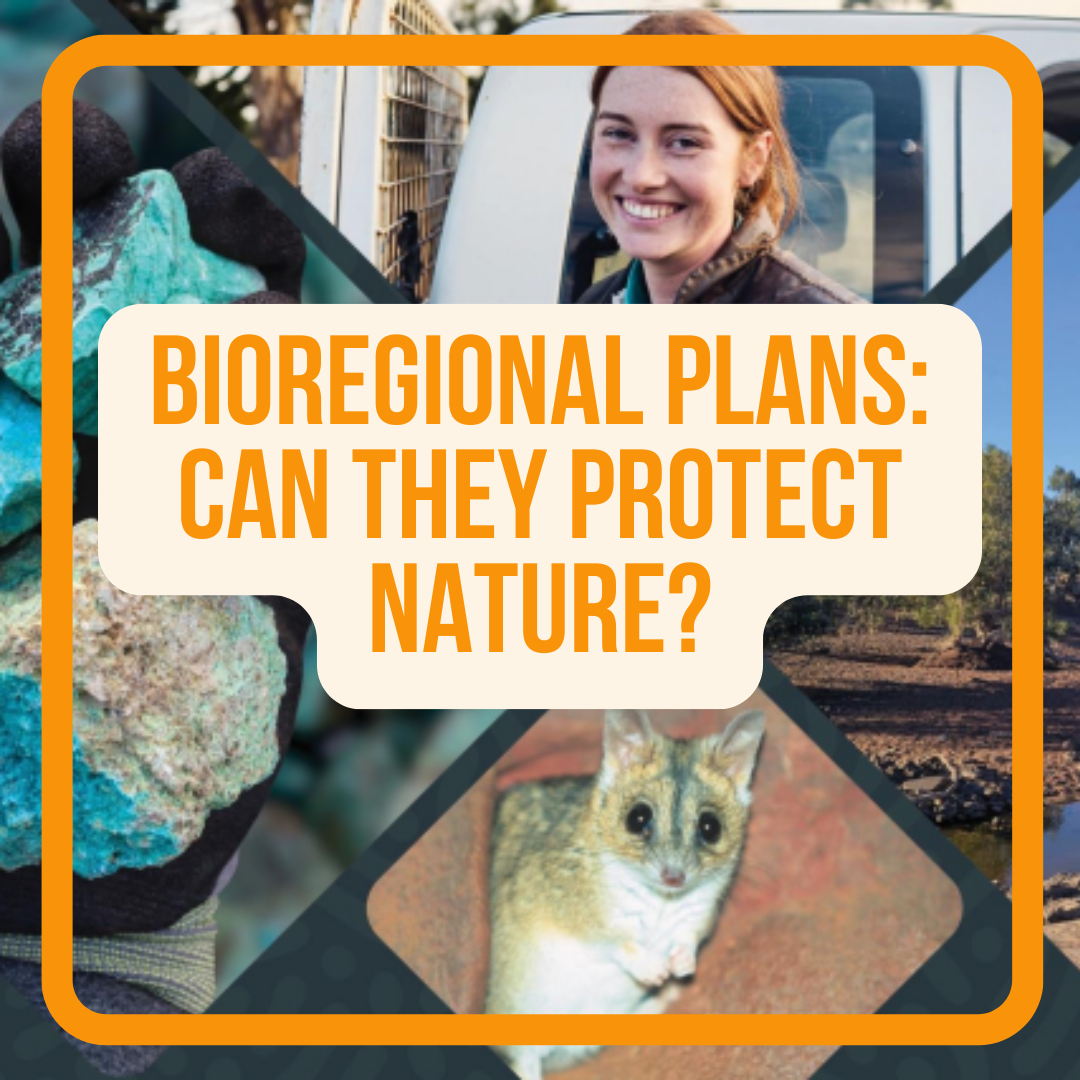
Right now, we have a chance to strengthen Bioregional Planning to ensure critical minerals mining in Northwest Queensland doesn't cost the Earth.
Our submission outlines recommendations relating to the following:
- Clarity around how the Plan will be used
- Avoidance of impacts to irreplaceable values
- Protection of ecological connectivity
- Transparent monitoring and evaluation
- Respect for First Nations rights and knowledge
- Application of the precautionary principle
Read our full submission here.
As it stands, there is a risk of the Bioregional Guidance Plan becoming an exercise in greenwashing, with no real impact on development and decision-making. We must ensure it is strengthened however possible.
How to Have Your Say
All of the information you need is available at: https://environment.qld.gov.au/management/planning-guidelines/bioregional-planning.
If you don't already have an In the Loop account, you'll need to make one if you want to complete their online survey or upload a submission to the portal.
Alternatively, the simplest way to have your say is to email a submission to [email protected].
No Time to Nerd Out on All the Info?
No worries! Simply skim through our submission, pick out the points that resonate with you and compile them into an email to [email protected]. It doesn't have to be pretty, but it does need to be in by 5pm Friday 17th July! Bonus points if you CC or BCC us into your email - we love to see your work in action!
About Bioregional Planning
Bioregional guidance planning is a strategic approach established under Australia’s EPBC Act which guides how cumulative impacts to the environment should be managed in an area of economic importance. EPBC Act decision-makers must have regard to bioregional guidance plans when making a relevant decision, including project decisions and landscape-scale approaches.
Bioregional guidance planning will provide clear guidance about areas where significant efforts should be made to avoid development impacts, measures to manage cumulative impacts, and protection and restoration opportunities. This information is intended to help industries, regulators, and the community during decision-making.
Showing 1 reaction