


If big solar is in our future, how do we ensure our biodiversity is, too?
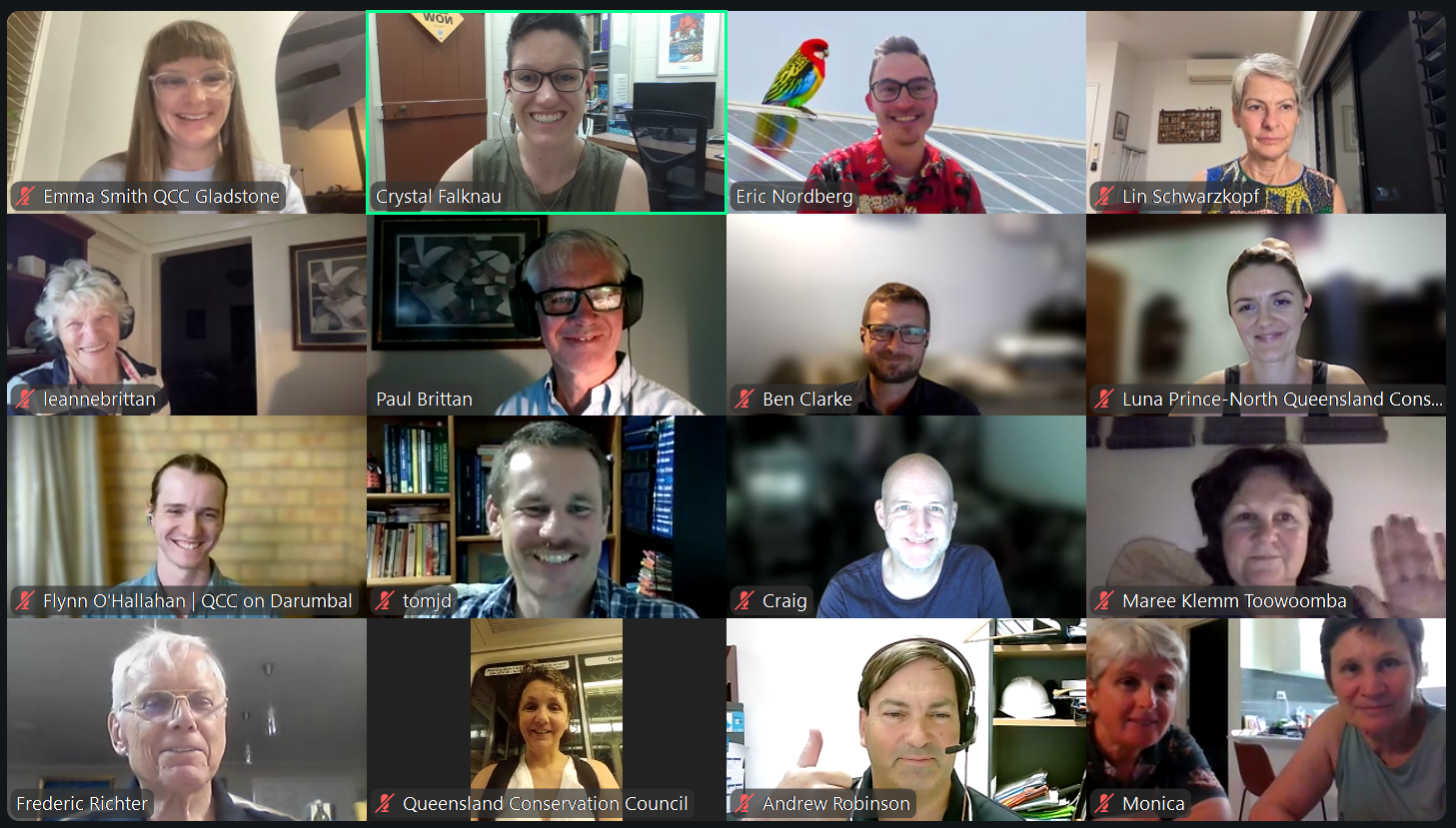
Last night, we jumped online with some experts to find out!
Dr Eric Nordberg of UNE and Distinguished Professor Lin Schwarzkopf of JCU shared the findings of their ongoing research into principles for large-scale solar projects to protect - and even enhance - natural values of solar farm sites.
The questions and discussion that ensued covered a range of topics from technological innovation to community benefit agreements. Our discussion was made rich and robust with the inclusion of various participant perspectives - from community members, ecologists, renewable energy advocates and even local government.
Together, we delved into the benefits of so called "conservoltaics" and the barriers to getting widespread uptake from solar developers. We learned that the best thing we can do to support solar developers to adopt these principles is to connect them to the research available (at the earliest stages of project planning) and push the benefits - not just for the environment, but also for social licence.
WATCH THE RECORDING
ACCESS THE SLIDES
How solar farms can protect biodiversity:
- Minimise habitat loss
- Maintain connectivity
- Rehabilitate/re-establish lost microhabitats
- Avoid a "sea" of panels - patchy is better
- Strategically place fauna-friendly fencing
RECOMMENDATIONS
1. Strategic placement
Where you actually place a solar farm, is really important. Again, obviously, simple things like avoiding areas of super high biodiversity, minimise your clearing wherever possible, all those things will, you know, keep that habitat value high, right from the beginning.
2. Purpose-built design
Solar farms can be enormous, and I agree that that is a potential concern, but if we can kind of recreate these in a way where they're patchy, then it may not be a complete loss of essential habitat.
We already live in a very patchy environment across the country, and so where we do have, kind of these little connecting bits of habitat become really important. So we want to try and reduce or minimise any further, cutting off of these little tiny islands. Maintaining some kind of travel corridor would be excellent, so that animals can come and go. But in the case where that's not possible, recreating these little tiny stepping stone patches, can kind of allow animals to kind of hopscotch through the environment.
We saw fewer mammals within the solar farm [research site]. I think this is largely because of perimeter fencing. By strategically placing wildlife-friendly fencing, there's little animal gates that allow things to come and go, that would facilitate, you know, more use for especially some of our larger mammals.
3. Strategic management
The other big thing is about kind of rehabilitating some of those lost microhabitats that might actually be important for wildlife. if you think about some of the systems and the animals where we find things, things like rock piles are great for lizards and frogs and snakes and small mammals. But I imagine that you probably don't see very many rock piles within a solar farm. And so, if we can recreate some of those habitat structures, once construction is complete, we might be kind of recreating some of those micro-habitats that have been lost during the construction phase, either incidentally or on purpose.
4. Long-term monitoring
Access, and partnerships with local solar farm companies and various sites, and engagement is really key... And [also] engaging in long-term data collection and monitoring. Like most systems, these changes don't necessarily happen overnight. So, a lot of the techniques that we use in conservation and things like that are things that we're trialling, and then we need to see, does this actually have an effect?
5. Be proactive
We need to think about these kind of co-benefits wherever that's possible, and think of them as multi-use landscapes from the beginning, not after they're built, and we go, alright, well, now we've got the energy, coming in. Now what do we do in order to make it more wildlife-friendly? We should try and think of these, kind of win-wins from the very beginning.
BARRIERS TO UPTAKE
"So far, there's absolutely no reason why a solar farm has to do any of this stuff. They just don't have to be concerned. It's like any other development for energy supply. They don't necessarily have to be concerned about wildlife. The idea of being concerned about wildlife or responding and creating places for wildlife to live is a bit of a new idea, I think, for solar farms, and so we're trying to raise awareness about it, that they could be doing this if they wanted to." - Prof Lin Schwarzkopf
"There's no real rules or regulations that they have to do, you know, these extra benefits for biodiversity, aside from it makes them look good for the community, and, you know, they may need that social license to keep getting permits and things like that. So at the end of the day, it does kind of come down to what their purpose and their mission is for their company, and whether they want to invest in these kind of things. If that's important to them, that's great, and they want to be sustainable and all that kind of stuff. Whereas, you know, there isn't really any law. It's not like we can go and say, look, you have to fund research in order to answer these interesting questions, because I said so." - Dr Eric Nordberg
HOW YOU CAN HELP
- Share this blog post and the recording with your networks;
- Talk to solar developers in your area - current or future - about welcoming research on their project site or working with Eric and Lin to adopt best environmental practices from the start;
-
Connect with your local Regional Environmental Advocate to contribute to community-led guidelines for a nature-positive energy transition:
- Crystal - Townsville: [email protected]
- Emma - Gladstone: [email protected]
- Flynn - Rockhampton: [email protected]
- Megan - Toowoomba: [email protected]
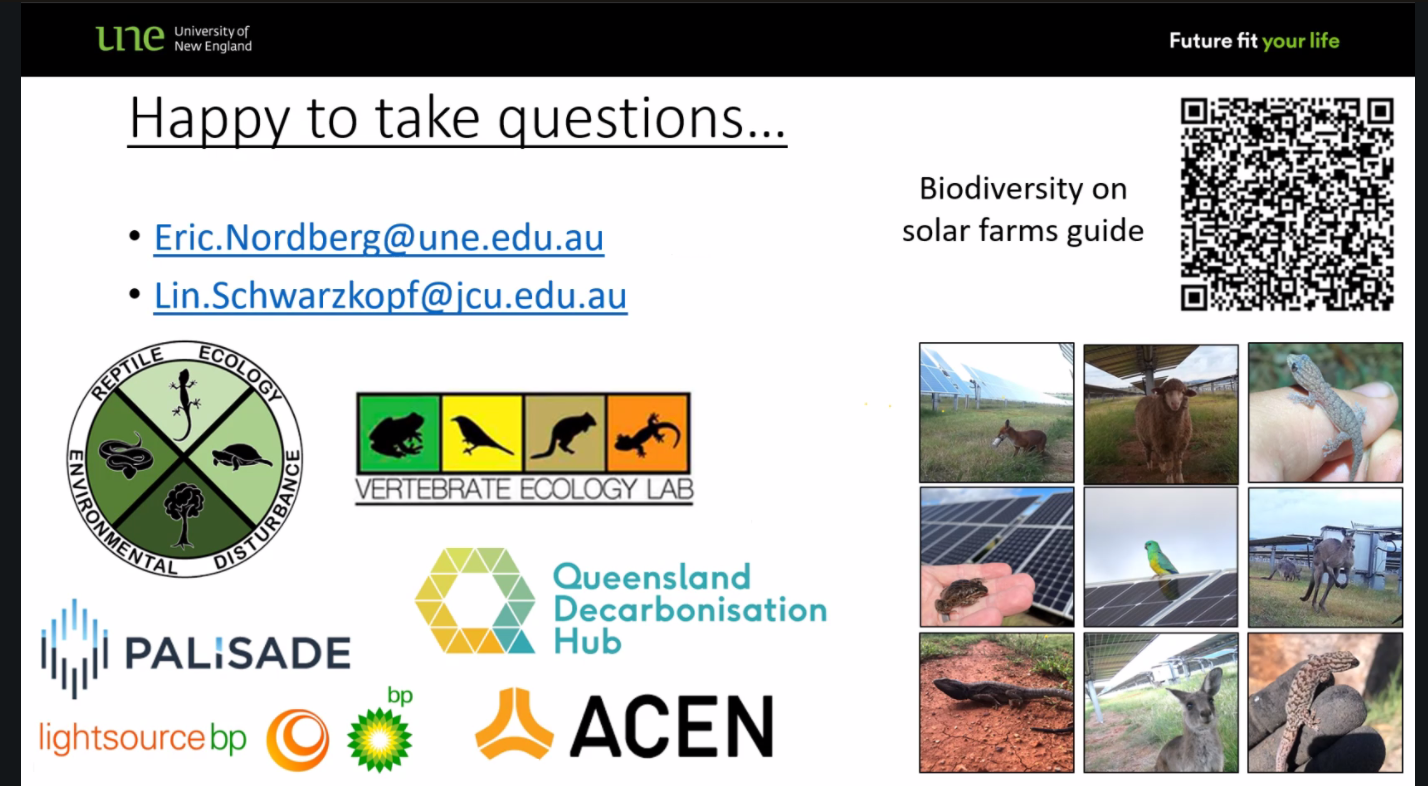
QR code link: Building better biodiversity on solar farms: a regenerative guide to nature-positive solar farming
Showing 1 reaction