

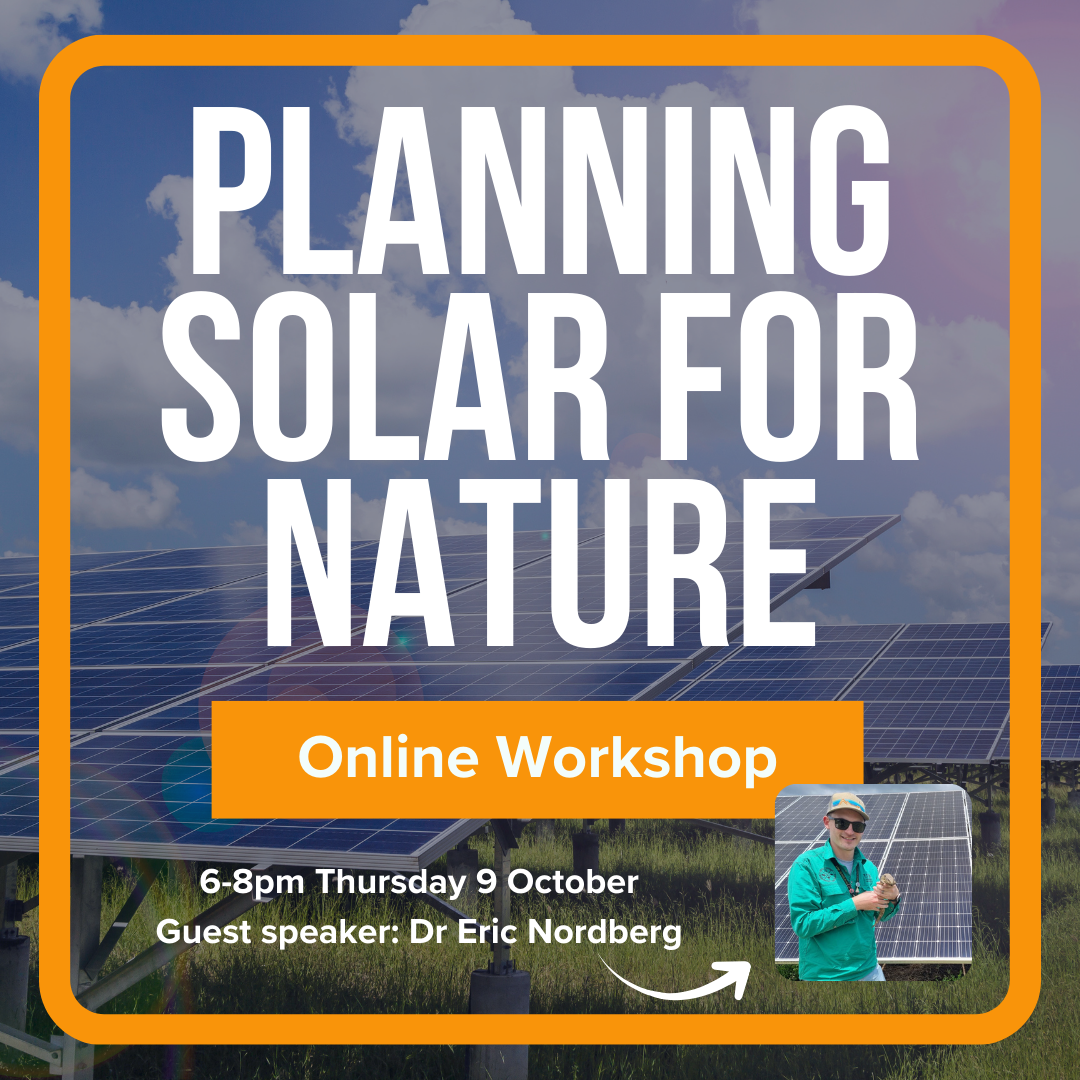
The sunshine state quickly embraced rooftop solar for its economic and environmental benefits, but could large-scale solar farms also be a win-win for climate and nature?
As we continue to investigate what is needed for a nature-positive energy transition in key regions across Queensland, we want to hear from the experts. Join us for this online workshop, where we'll hear from wildlife ecologist Dr Eric Nordberg and be joined by his renowned North Queensland-based colleague Prof. Lin Schwarzkopf.
Who is this for?
- Community members with an interest in achieving nature-positive outcomes in their local energy transition
- Decision-makers or key players within local or state government who want to improve their knowledge
- Solar energy proponents/developers looking to follow best practice to enhance biodiversity outcomes
Bring your questions and be ready for a great discussion where we can learn from the research and each other!
About our Guests
Dr. Eric Nordberg is a wildlife ecologist and Head of the Renewable Energy Hub at the University of New England. He pioneers research on conservoltaics (combining nature conservation and photovoltaic energy production), finding ways to improve habitat suitability on solar farms. His research explores which animals move into solar farms and how these facilities can be designed to provide habitat while generating electricity. His research aims to develop guidelines for nature-friendly solar farms and demonstrate how thoughtful design can transform solar installations into refuges for native species, creating a true win-win for nature conservation and renewable energy.
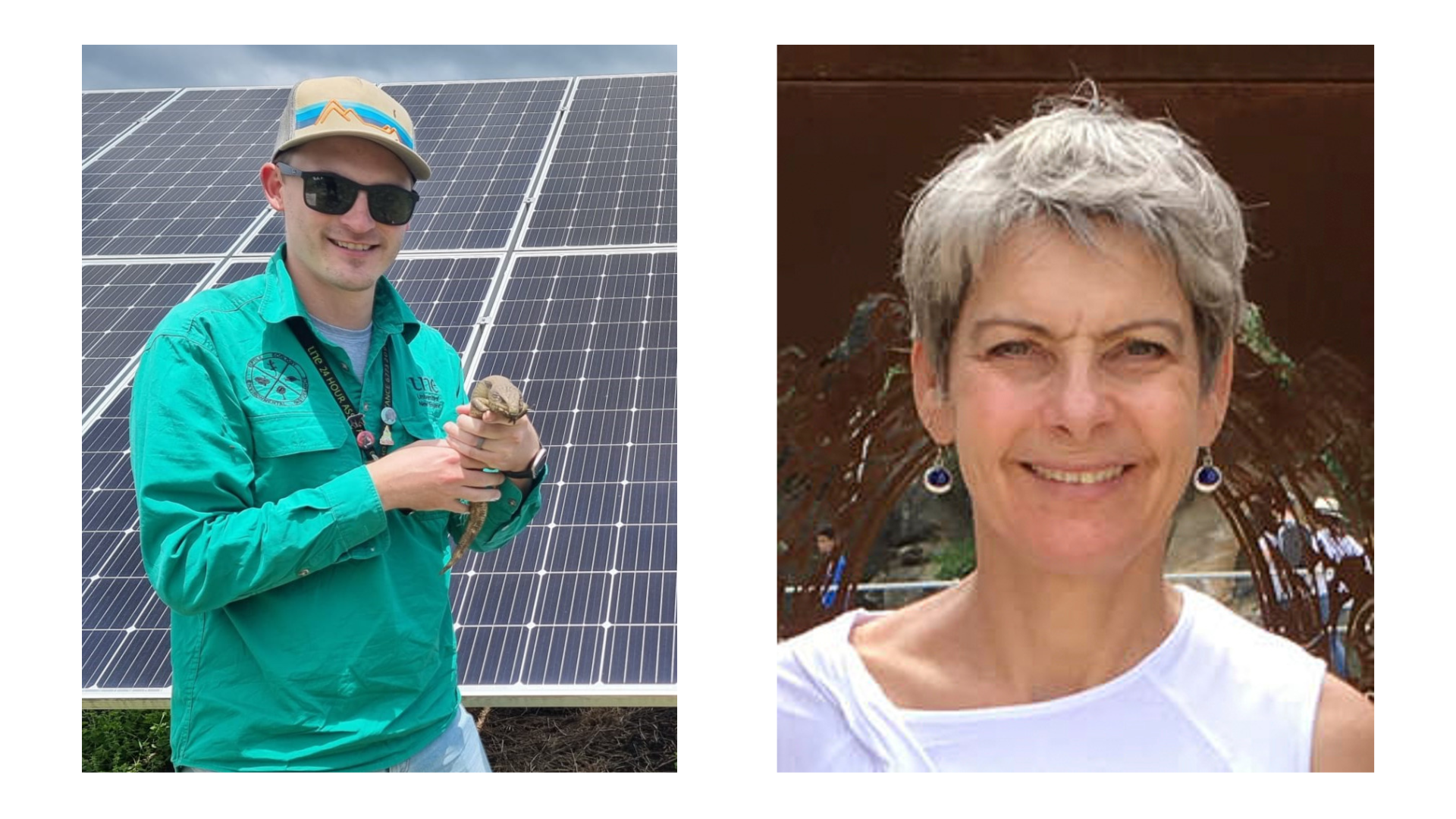
Distinguished Professor Lin Schwarzkopf is an ecologist at James Cook University. She earned her PhD from the University of Sydney in 1991 and has been a professor at JCU since 2012. Her research encompasses broad ecological and evolutionary questions, often adopting an integrative approach to address applied problems. Her work on the impact on biodiversity of different grazing strategies demonstrated that economically sustainable grazing practices can enhance biodiversity, bridging a philosophical gap between conservationists and graziers. The rapid growth of solar installations in Australia has provided another opportunity to examine the interactions between human-centred goals and conservation. Adehering to the principals of conservoltaics, solar farms provide habitat that can potentially be optimised for both conservation and energy production goals, fostering a win-win outcome.
About the Research
Large-scale solar farms are rapidly transforming landscapes worldwide, presenting both challenges and opportunities for biodiversity conservation. We introduce conservoltaic systems, solar installations that intentionally integrate nature conservation with renewable energy production. Using preliminary biodiversity survey data, we demonstrate how strategic design can enhance habitat connectivity and support diverse species within solar farms. Key strategies include establishing native vegetation corridors between arrays, retaining habitat features (rocks, logs, hollows), and incorporating ecological principles during pre-construction planning. We show how solar farms can transcend the energy-versus-environment dichotomy by creating multifunctional landscapes that offer practical win-win solutions for sustainable land management.
--------
This event is supported by the Queensland Government's Energy Partnerships framework.
--------
Please enter your postcode when you RSVP so we can see where you're calling in from.


Showing 39 reactions